Wildboarclough
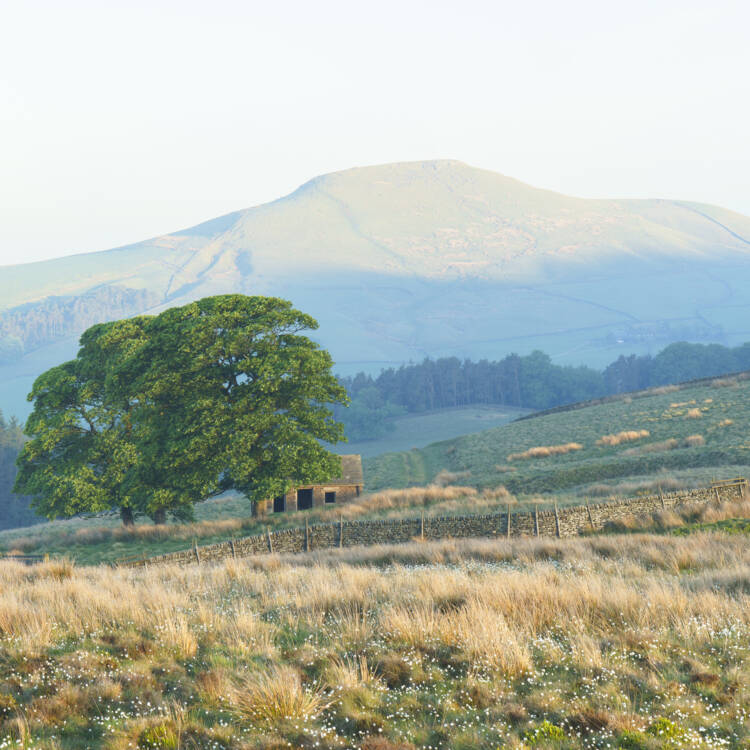
The village known as Wildboarclough is spread across an upland valley where the boundaries of Derbyshire, Staffordshire and Cheshire meet, and is shaped as much by legend as by the landscape. Its name carries two possible origins, the favourite being that this valley was where the last wild boar in England was killed, “clough” meaning “deep valley”; the other, which is more locally favoured, is that it is named after the “wild-bore” of water, or rather the wild stream that rushes through the valley. Either way, there is something untamed at the heart of this place that no amount of history has quite managed to smooth away. The old mill is long silent, and the post office that was once rumoured to be the largest sub-post office in England both stand as remnants of the village’s industrial past. During 2026, the felling of the many larch trees growing in the village will be completed in an attempt to prevent the spread of ramorum blight. This will yet again change the face of the valley. Change is of course inevitable, as it always has, and yet Wildboarclough will endure, with Shutlingsloe, “the Cheshire Matterhorn,” ever standing tall above it.
Shutlingsloe
Above the valley rises Shutlingsloe, a peak so sharply shaped that walkers have long nicknamed it the “Matterhorn of Cheshire.” At 506 metres it is not the highest ground in the county, but it is the most distinctive, its steep, pointed profile visible for miles across the Cheshire plain long before you reach its foot. The hill is built from layers of gritstone and mudstone laid down some 380 million years ago, when this corner of England lay beneath a river delta, and that ancient bedrock is still what gives the summit its sudden, dramatic rise out of Macclesfield Forest below. The Peak District Boundary Walk crosses the trig point at the top, the highest point on its 200-mile route, and on a clear day the view stretches from the Roaches to Shining Tor and on into Wales. Like Wildboarclough beneath it, Shutlingsloe has watched the valley change for centuries, and shows no sign of doing anything other than standing exactly where it always has.